
What Is ABA Therapy? A Parent-Friendly Guide
If your child has recently been diagnosed with autism, you’ve probably heard the term ABA therapy. For many families, ABA is one of the first services recommended after a diagnosis, but understanding what it actually is can feel overwhelming.
What is ABA?
At its core, Applied Behavior Analysis (ABA) is a science of learning and behavior. It focuses on understanding how people learn new skills, why certain behaviors happen, and how the environment can support success.
Rather than focusing only on reducing challenging behaviors, ABA aims to help individuals build functional skills that improve everyday life. These may include communication, social interaction, independence, self-care, emotional regulation, play skills, and participation in family and community activities.
What Does ABA Therapy Look Like?
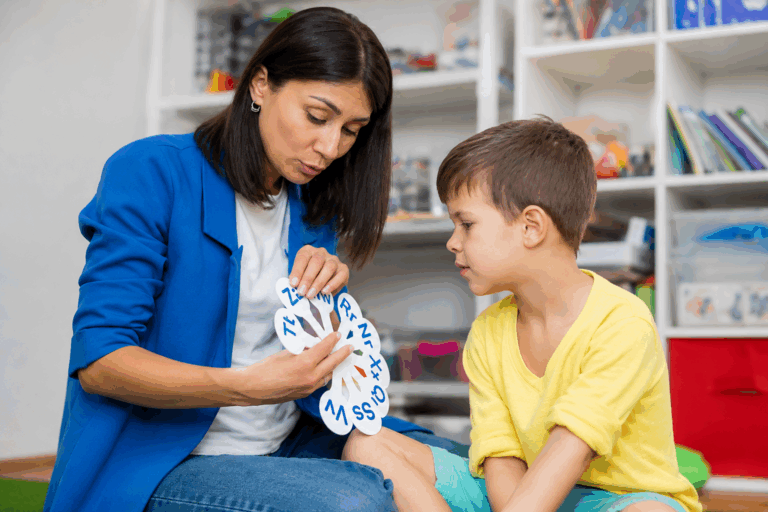
Many parents are surprised to learn that ABA often looks a lot like teaching and play!
An ABA therapist may work with a child to:
- Ask for help instead of becoming frustrated
- Communicate wants and needs using words, signs, or an AAC device
- Follow daily routines more independently
- Learn self-care skills such as dressing, toileting, or brushing teeth
- Play and interact with peers
- Handle changes in routines or transitions more successfully
One of the most important tools used in ABA is positive reinforcement. This simply means that when a child learns a new skill or demonstrates a desired behavior, they receive something motivating to them, such as praise, a favorite activity, a toy, or extra play time. This increases the likelihood that the skill will happen again in the future.
New to ABA Therapy? Start Here.
These articles will walk you through the process step by step.
Getting Started with ABA Therapy – Learn what to expect as you begin ABA therapy, from the intake process and assessment to meeting your child’s therapy team and starting services.
What I Tell Parents During Their Child’s First Week of ABA Therapy – Learn what typically happens during the first few sessions, why therapists focus on pairing, and what you can expect as your child gets to know their therapy team.
How Parents Can Support ABA Therapy at Home – Discover simple ways to reinforce your child’s learning, encourage progress, and work together with your ABA team between therapy sessions.
How Is ABA Different from Other Therapies?
ABA is highly individualized. No two treatment plans should look exactly the same because no two children with autism have the same strengths, challenges, interests, or goals.
Stephen Shore
“If you’ve met one person with autism, you’ve met one person with autism.”
Behavior analysts begin by getting to know the child and family. They look at current skills, identify areas of need, and work with parents and caregivers to develop goals that are meaningful for that child.
For one child, therapy may focus on communication and play skills. For another, the priority may be toileting, safety skills, or learning to participate more independently at school.
ABA also relies on ongoing data collection. Therapists track progress so they can see what is working and make adjustments when needed. This helps ensure that treatment decisions are based on the child’s actual progress rather than guesswork.
Who Can Benefit from ABA?
ABA is most commonly associated with autism, but the principles of learning and behavior can be used to support many different individuals and situations.
Children receiving ABA services often work on skills such as:
- Communication
- Social interaction
- Play and leisure skills
- Daily living skills
- Emotional regulation
- Safety awareness
- Independence at home, school, and in the community
Many families seek ABA support when a child is struggling with skills that impact everyday life or when challenging behaviors are making it difficult for the child to learn, communicate, or participate in activities.
Common Misconceptions
Like many therapies, ABA is sometimes misunderstood. Let’s look at a few common myths.
Myth: ABA is only about stopping behaviors.
Reality: While ABA can help address behaviors that interfere with learning or safety, much of therapy focuses on teaching new skills! Communication, independence, social skills, self-advocacy, and daily living skills are often major areas of focus.
Myth: ABA tries to make Autistic children act like everyone else.
Reality: ABA focuses on helping people achieve goals that improve their quality of life. Therapy is tailored to the individual’s strengths, preferences, needs, and family priorities.
Myth: Every ABA program is the same.
Reality: ABA is highly individualized. Goals, teaching strategies, reinforcers, and supports are based on the unique needs of each child and family.
Why Do Parents Choose ABA?
Many families choose ABA because it provides a structured, evidence-based approach to teaching important life skills.
Research has shown that ABA can be effective in helping people develop communication, social, adaptive, and learning skills. However, the most successful programs are those that work collaboratively with families and focus on goals that are personalized to the child.
For many parents, the biggest benefit isn’t simply learning a new skill, it’s seeing their child become more independent, confident, and able to participate in everyday activities.
My Final Thoughts
ABA therapy is not a one-size-fits-all program. At its best, it is a personalized approach that helps children learn new skills while supporting their unique strengths and needs.
Whether the goal is communicating wants and needs, making friends, participating in family routines, or becoming more independent, ABA uses scientific, evidence-based strategies that can help children build skills that support success at home, at school, and in the community.
About the Author
Krysten Clark Wilkes, M.A., BCBA, LBA is a Board Certified Behavior Analyst and founder of Learning & Behavior Autism Services. She works with autistic children and their families throughout Maryland, helping children build communication, independence, social, and daily living skills through evidence-based, family-centered support.