
How to Teach Bathroom Hygiene Skills to a Child with Autism
Many parents spend months (or years) helping their child learn to use the toilet independently. However, for some children with autism, toilet training is only part of the journey.
A child may successfully use the toilet, yet still need help with important bathroom hygiene skills such as wiping, checking for cleanliness, flushing, washing hands, and completing the entire bathroom routine independently. For girls, that means eventually learning how to prepare for her first period.
As a pediatric Board Certified Behavior Analyst (BCBA), I often work with families who are excited that their child is toilet trained but are unsure how to teach the next step: personal hygiene. The good news is that these daily living skills can be taught just like any other skill, with patience, practice, and the right support.
Why Bathroom Hygiene Matters
Being able to clean oneself after using the toilet is an important life skill. It promotes:
- Independence
- Privacy and dignity
- Improved health and hygiene
- Greater participation in school and community activities
- Reduced caregiver assistance
While these skills may seem simple to many adults, they involve several smaller skills that must be learned and practiced.
For example, a child may need to learn how to:
- Get toilet paper
- Wipe appropriately
- Check whether they are clean
- Continue wiping if needed
- Dispose of toilet paper
- Flush the toilet
- Wash hands thoroughly
Each of these steps can be challenging for children with autism, especially if they struggle with communication, sequencing, or following multi-step routines.
What the Research Says
A study published in Behavior Analysis in Practice looked at a method for teaching bathroom hygiene skills to two young children with autism who were already toilet trained but still required adult assistance after bowel movements. Researchers taught the children how to recognize whether toilet paper was clean or dirty and how to complete the wiping routine independently.
The children practiced using a doll and simulated materials before applying the skills in real-life situations. After training, both children successfully demonstrated the hygiene routine at home, and their skills remained strong six months later. Parents also reported increased independence and reduced need for assistance.
Break the Skill Into Small Steps
One reason bathroom hygiene can be difficult is that it is actually a chain of many smaller behaviors.
Rather than teaching everything at once, focus on one step at a time.
A simple hygiene routine might include:
- Get toilet paper.
- Wipe.
- Look at the toilet paper.
- Decide if it is clean or dirty.
- Repeat wiping if needed.
- Throw toilet paper away or place it in the toilet.
- Flush.
- Pull up clothing.
- Wash hands.
Many children learn more easily when each step is taught separately and then combined into a complete routine.
Use Visual Supports
Children with autism often benefit from visual supports because they make expectations clear and consistent.
Consider using:
- Picture schedules
- Step-by-step visual checklists
- Bathroom routine charts
- Visual reminders near the toilet or sink
Visual supports can reduce the amount of verbal prompting a child needs and help them become more independent over time.
Practice Before It Becomes Necessary
One of the most interesting parts of the research was the use of simulation training. Instead of waiting for an actual bowel movement to occur, children practiced the routine using a doll and simulated materials (i.e. using SunButter to resemble poop!). This allowed them to learn the steps in a low-pressure environment before applying the skill in real life.
Parents can use a similar approach by:
- Practicing bathroom routines with dolls
- Role-playing bathroom steps
- Reviewing visual schedules
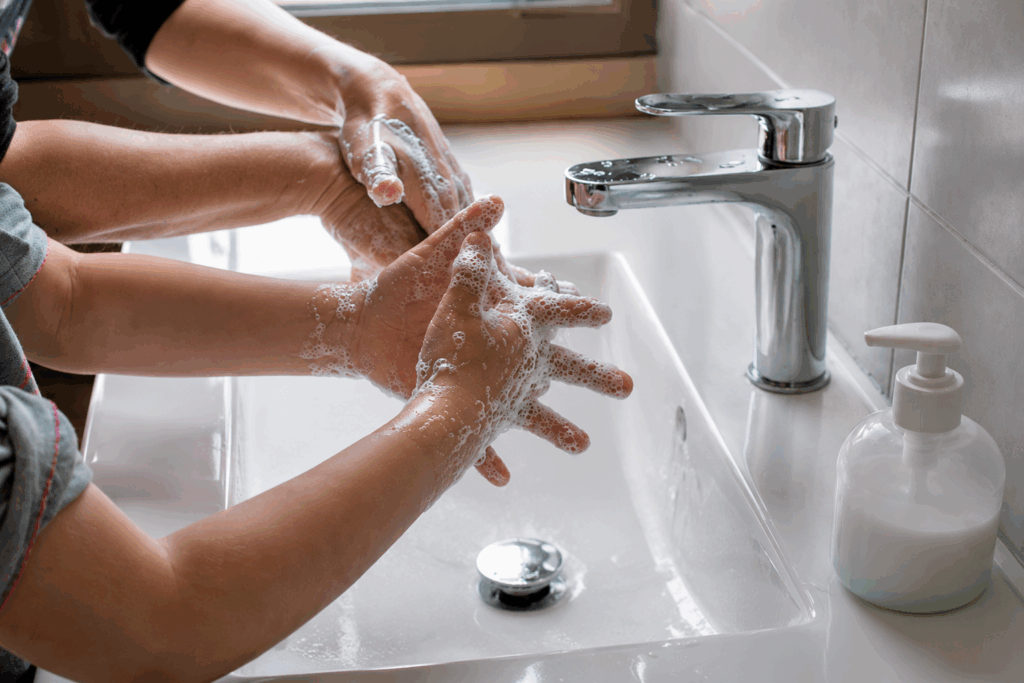
- Rehearsing handwashing and flushing
Practice opportunities outside of actual bathroom use can increase confidence and understanding.
Teach What “Clean” Means
The study taught children to identify whether toilet paper appeared “clean” or “dirty” before moving on to the next step. Researchers gradually taught this discrimination skill using examples that varied in appearance.
Parents can help by:
- Using simple language consistently
- Teaching the difference between clean and dirty
- Providing visual examples when appropriate
- Practicing identification skills during teaching activities
Consistency is important. Use the same words every time so your child learns exactly what is expected.
Fade Your Help Gradually
It is natural to want to help your child complete the task correctly. However, too much assistance can make it harder for independence to develop.
Instead:
- Start with the support your child needs.
- Gradually reduce prompts over time.
- Allow opportunities for independent responding.
- Praise effort and success.
The goal is for your child to complete more and more of the routine on their own.
Work Together Across Settings
Skills learned during therapy sessions do not always automatically transfer to home, school, or community settings.
One reason the study was successful is that parents were involved in the process and practiced the skills at home after training occurred. This helped children use the skills in their natural environment.
If your child receives ABA therapy, consider working with your BCBA to ensure everyone is teaching the same routine using the same expectations.
Progress Takes Time
Bathroom hygiene is a complex self-care skill. Some children may learn it quickly, while others need additional practice and support.
If your child can use the toilet independently but still needs help with wiping, cleanliness checks, or handwashing, know that these skills can be taught. With consistent practice, visual supports, and gradual guidance, many children with autism can learn to complete bathroom routines more independently.
My Final Thoughts
Toilet training is a major milestone, but it is only one part of bathroom independence. Teaching hygiene skills such as wiping, checking for cleanliness, flushing, and handwashing can help children gain confidence, improve independence, and participate more fully in daily life.
By breaking the routine into manageable steps and providing consistent support, parents can help their child develop skills that will benefit them for years to come.
About the Author
Krysten Clark Wilkes, M.A., BCBA, LBA is a Board Certified Behavior Analyst and founder of Learning & Behavior Autism Services. She works with autistic children and their families throughout Maryland, helping children build communication, independence, social, and daily living skills through evidence-based, family-centered support.