Why Daily Living Skills Matter More Than You Think
When parents think about autism therapy, they often focus on communication, social skills, or reducing challenging behaviors. While those areas are important, there is another set of skills that can have a lasting impact on a child’s independence and quality of life: daily living skills.
Daily living skills are the everyday tasks we use to take care of ourselves and participate in family and community life. These skills include things like washing hands, brushing teeth, getting dressed, preparing simple meals, cleaning up after activities, and managing personal hygiene.
For many children with autism and developmental disabilities, these skills do not always develop naturally and may require direct teaching and practice. The good news is that daily living skills can be taught just like any other skill.
Research shows that children with autism can successfully learn daily living skills such as handwashing, cleaning up toys, dressing, and household chores when parents are taught how to provide structured support and practice opportunities at home.
What Are Daily Living Skills?
Daily living skills are the practical tasks we perform throughout the day to care for ourselves and our environment.
Examples include:
Personal Care Skills
- Washing hands
- Brushing teeth
- Taking a shower or bath
- Using deodorant
- Managing menstrual hygiene
- Grooming and hair care
Dressing Skills
- Putting on clothing
- Choosing weather-appropriate clothing
- Fastening buttons and zippers
- Tying shoes
Household Skills
- Cleaning up toys
- Making a bed
- Putting away laundry
- Setting the table
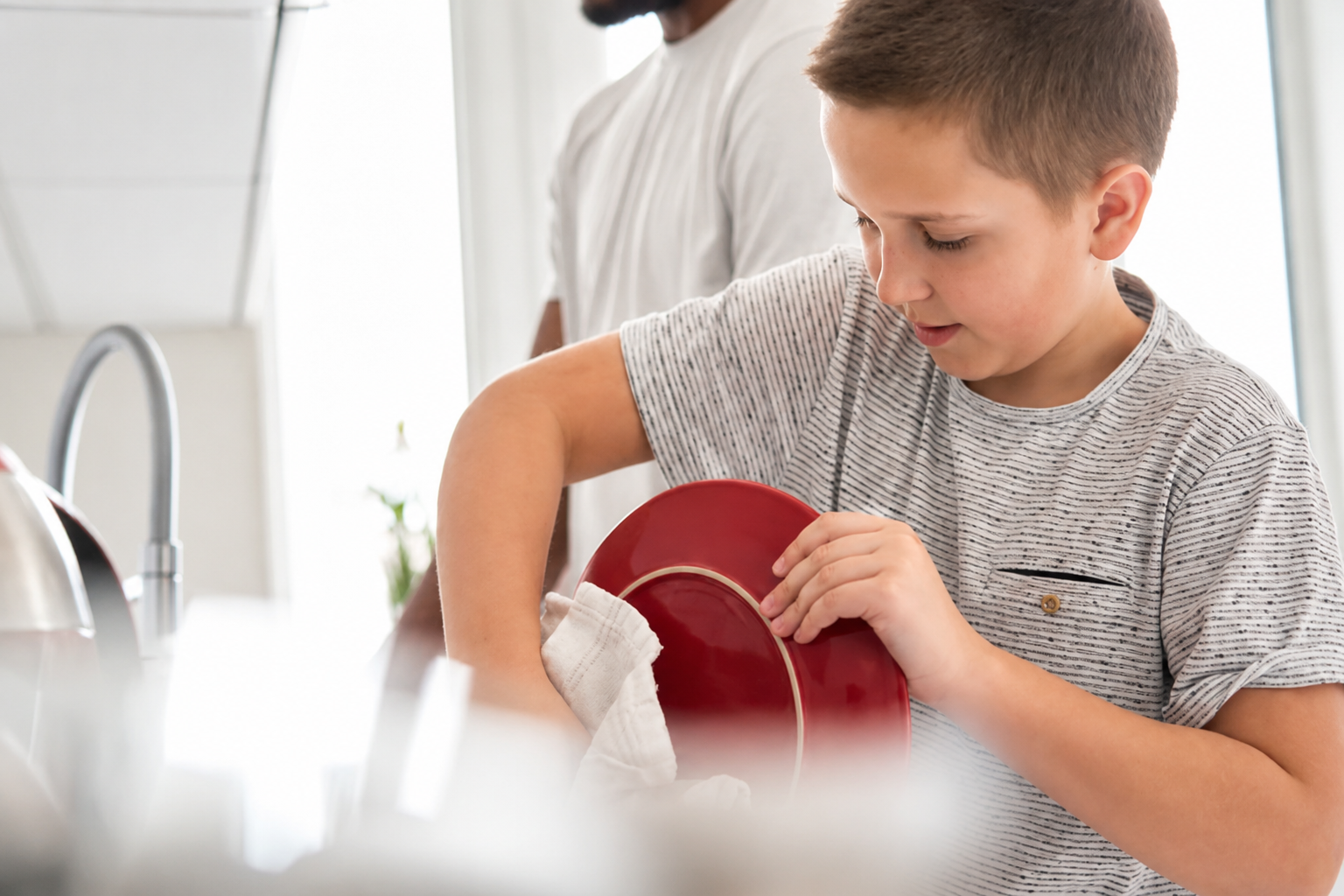
- Unloading the dishwasher
Community and Safety Skills
- Following routines in public places
- Shopping with a caregiver
- Identifying important personal information
- Practicing safety rules
These skills help children become more independent and confident as they grow.
Why Are Daily Living Skills So Important?
Many parents naturally focus on academic skills, communication, and behavior goals. However, research shows that daily living skills play an important role in long-term independence.
Children who learn self-care and household skills are often better prepared for adulthood because they can participate more independently in home, school, and community routines.
Daily living skills can also:
- Reduce dependence on caregivers
- Increase confidence and self-esteem
- Improve participation in family activities
- Create more opportunities for community involvement
- Support future employment and independent living goals
Every small skill learned today can contribute to greater independence later in life.
Why Some Children Need Extra Support
Many daily living skills involve multiple steps.
For example, washing hands requires a child to:
- Turn on the water.
- Wet hands.
- Apply soap.
- Rub hands together.
- Rinse.
- Turn off the water.
- Dry hands.
While these steps may seem simple to adults, they can feel overwhelming for a child who struggles with communication, motor skills, attention, sequencing, or executive functioning.
Children with autism often benefit from direct instruction rather than assuming they will learn these skills simply through observation.
How to Teach Daily Living Skills
One of the most effective ways to teach daily living skills is to break large tasks into smaller steps.
This process is called a task analysis.
Instead of teaching “wash your hands,” you teach each individual step of handwashing.
Instead of teaching “clean your room,” you might teach:
- Put toys in the toy bin.
- Put books on the shelf.
- Put dirty clothes in the laundry basket.
- Throw away trash.
Breaking tasks into smaller pieces can make learning feel more manageable and allows children to experience success along the way.
Use Visual Supports
Many children benefit from visual reminders that show what to do.
Examples include:
- Picture schedules
- Checklists
- First/Then boards
- Step-by-step visual instructions
Visual supports can help reduce adult prompting and encourage greater independence.
For example, a visual handwashing chart posted near the sink may help a child complete the routine without needing repeated verbal reminders.
Practice in Real-Life Situations
One common mistake is teaching skills only during therapy sessions or structured teaching time.
Children often learn best when skills are practiced in the environment where they will actually be used.
For example:
- Practice handwashing in the bathroom.
- Practice setting the table before meals.
- Practice putting away laundry after clothes are washed.
- Practice cleaning up toys after playtime.
The more opportunities children have to use skills in real-life situations, the more likely they are to become independent.
Praise Progress, Not Perfection
Learning daily living skills takes time.
Your child may need prompts, reminders, and practice before mastering a new routine.
Celebrate small wins:
- Putting on one shoe independently
- Remembering to wash hands after using the bathroom
- Putting dishes in the sink after a meal
- Cleaning up one area of a room
Progress often happens one step at a time.
Start with Skills That Matter Most
It can be tempting to teach everything at once, but focusing on a few meaningful goals is often more successful.
Ask yourself:
- What skill would make daily life easier for my child?
- What skill would make daily life easier for our family?
- What skill will increase my child’s independence?
Start there.
The most important skill isn’t always the most complex one. Sometimes learning to wash hands independently or put dirty clothes in a hamper can make a significant difference.
Final Thoughts
Daily living skills are some of the most meaningful skills we can teach our children.
While communication, academics, and social skills are important, the ability to care for oneself and participate in everyday routines can have a lasting impact on independence and quality of life.
Whether your child is learning to brush their teeth, put away laundry, or prepare for their first period, remember that these skills can be taught one step at a time.
With patience, practice, and the right supports, every child can make progress toward greater independence.